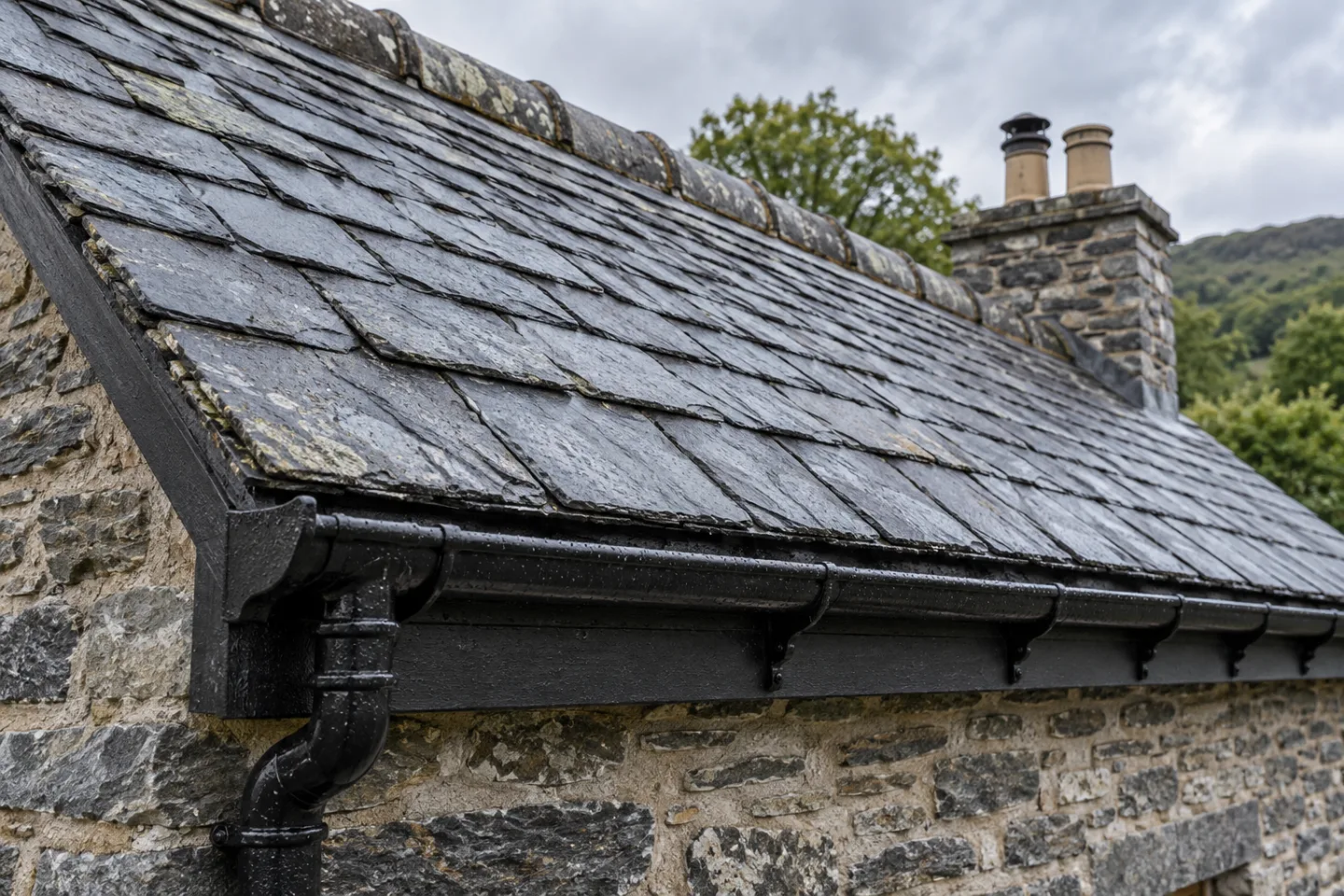
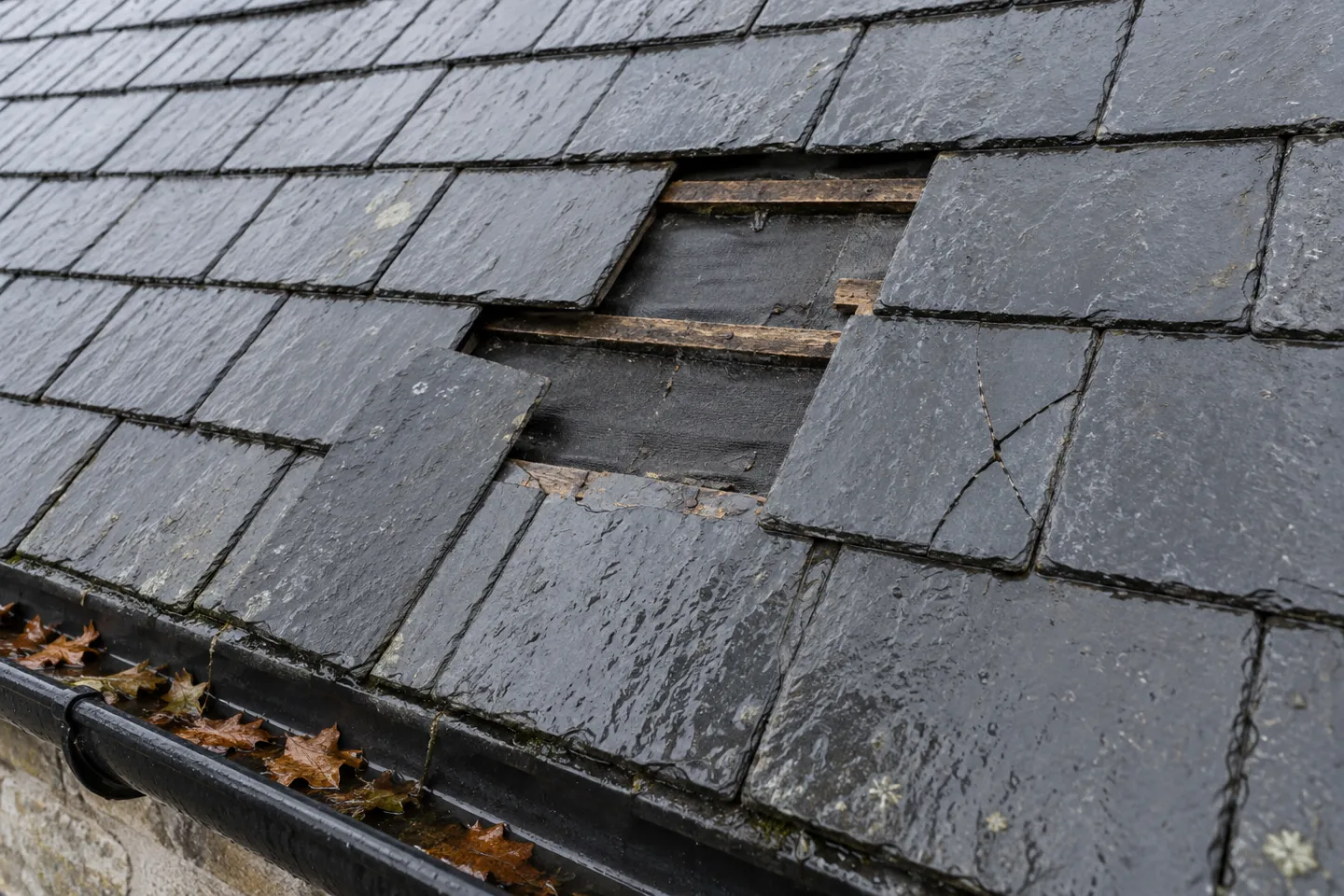
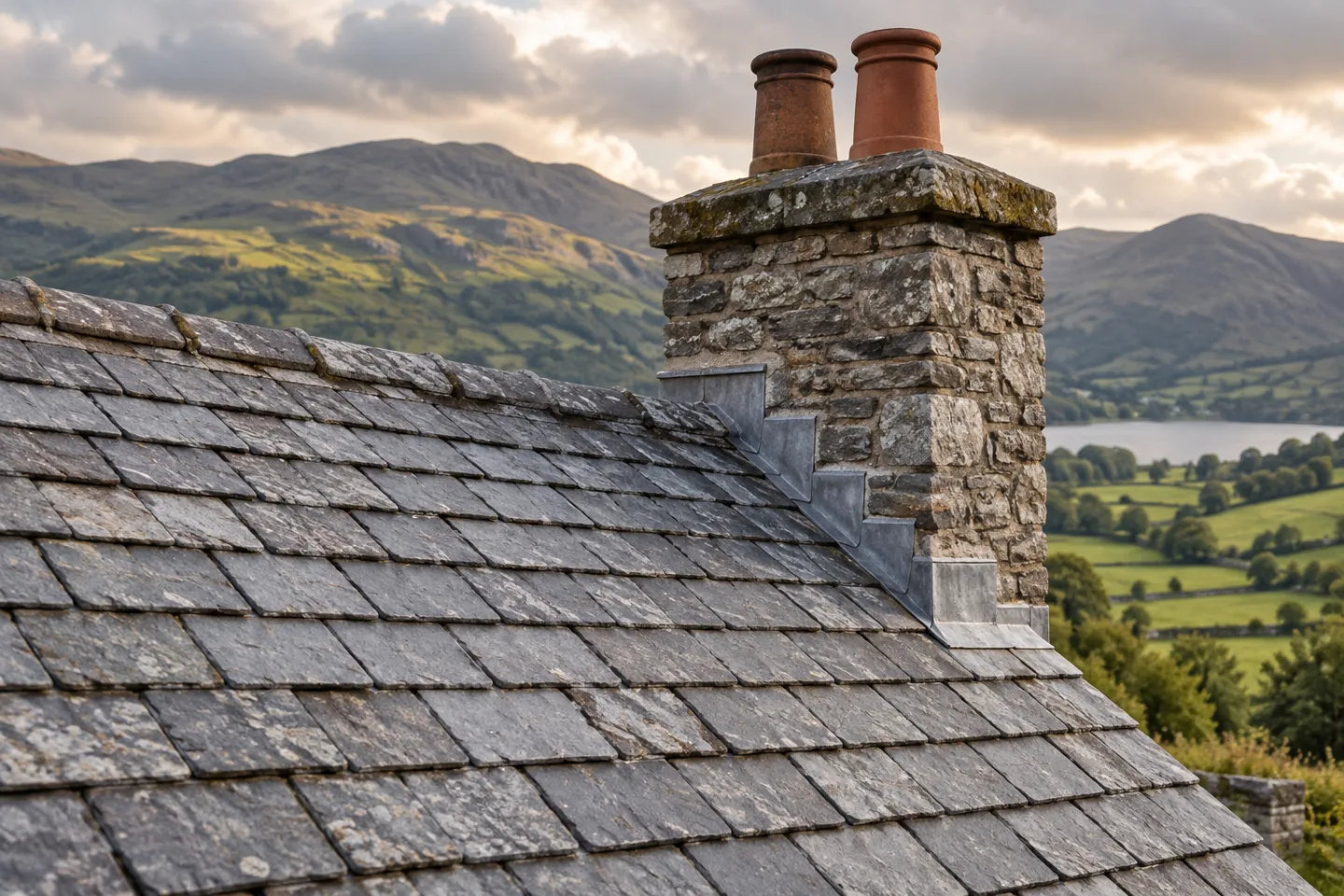
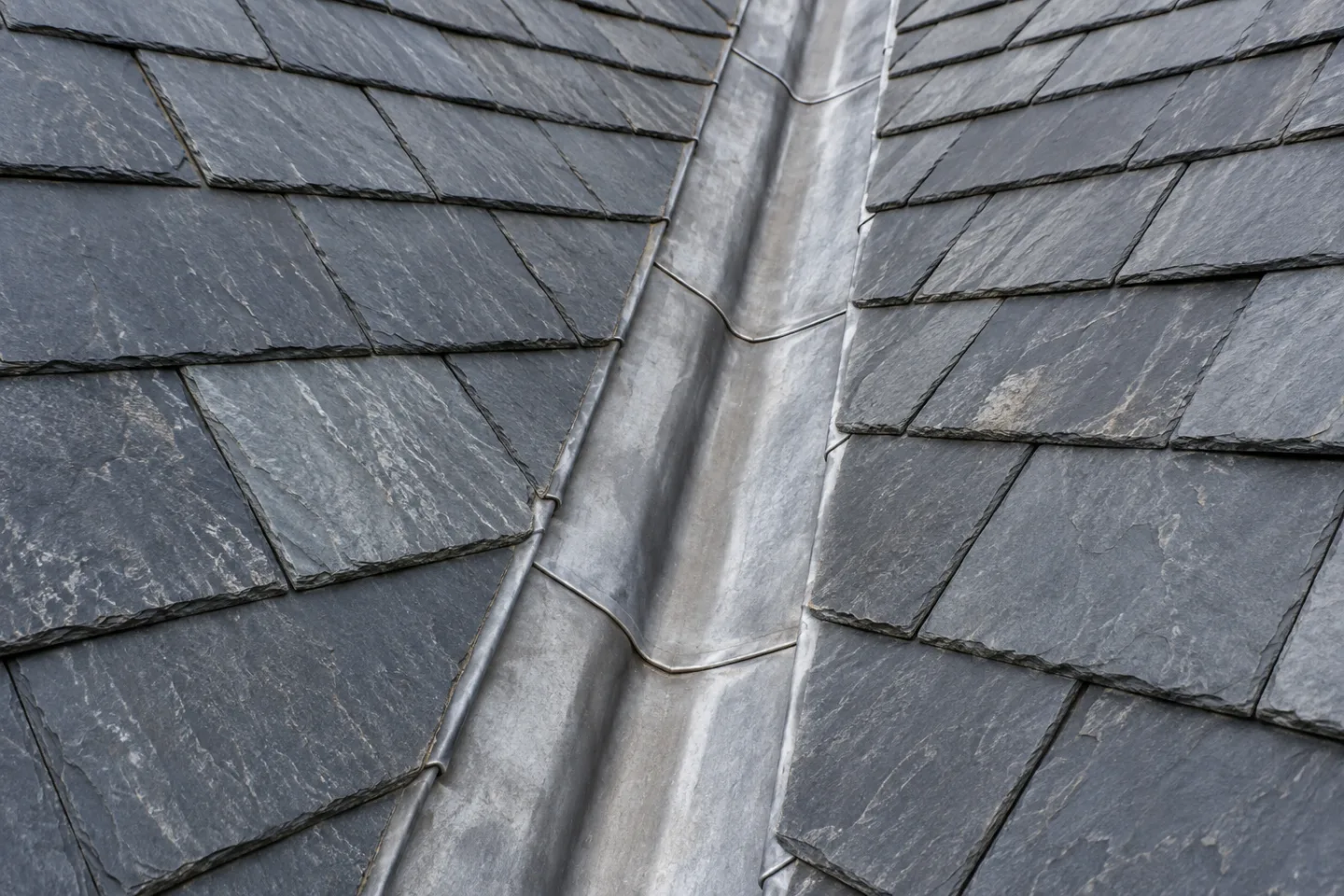
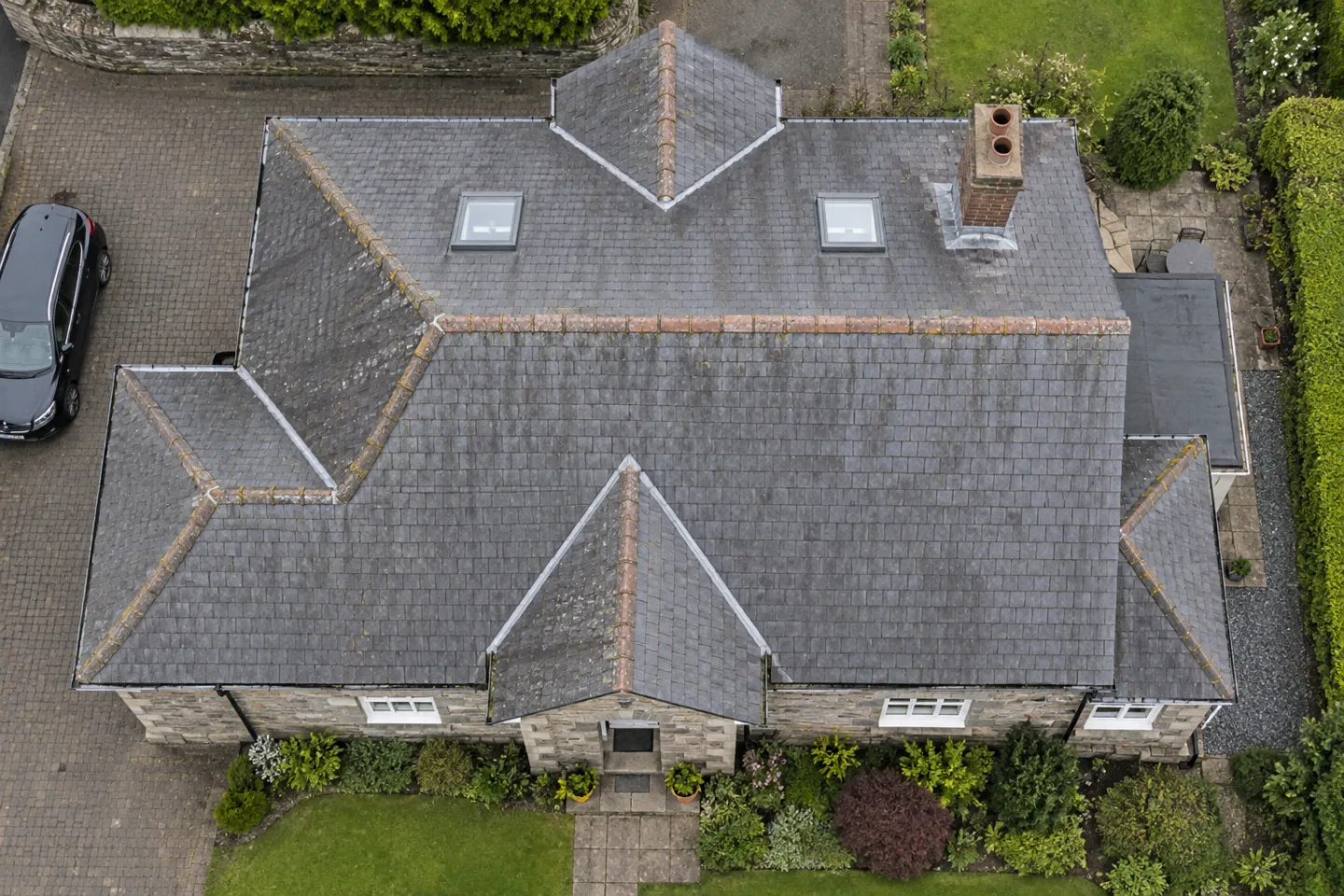
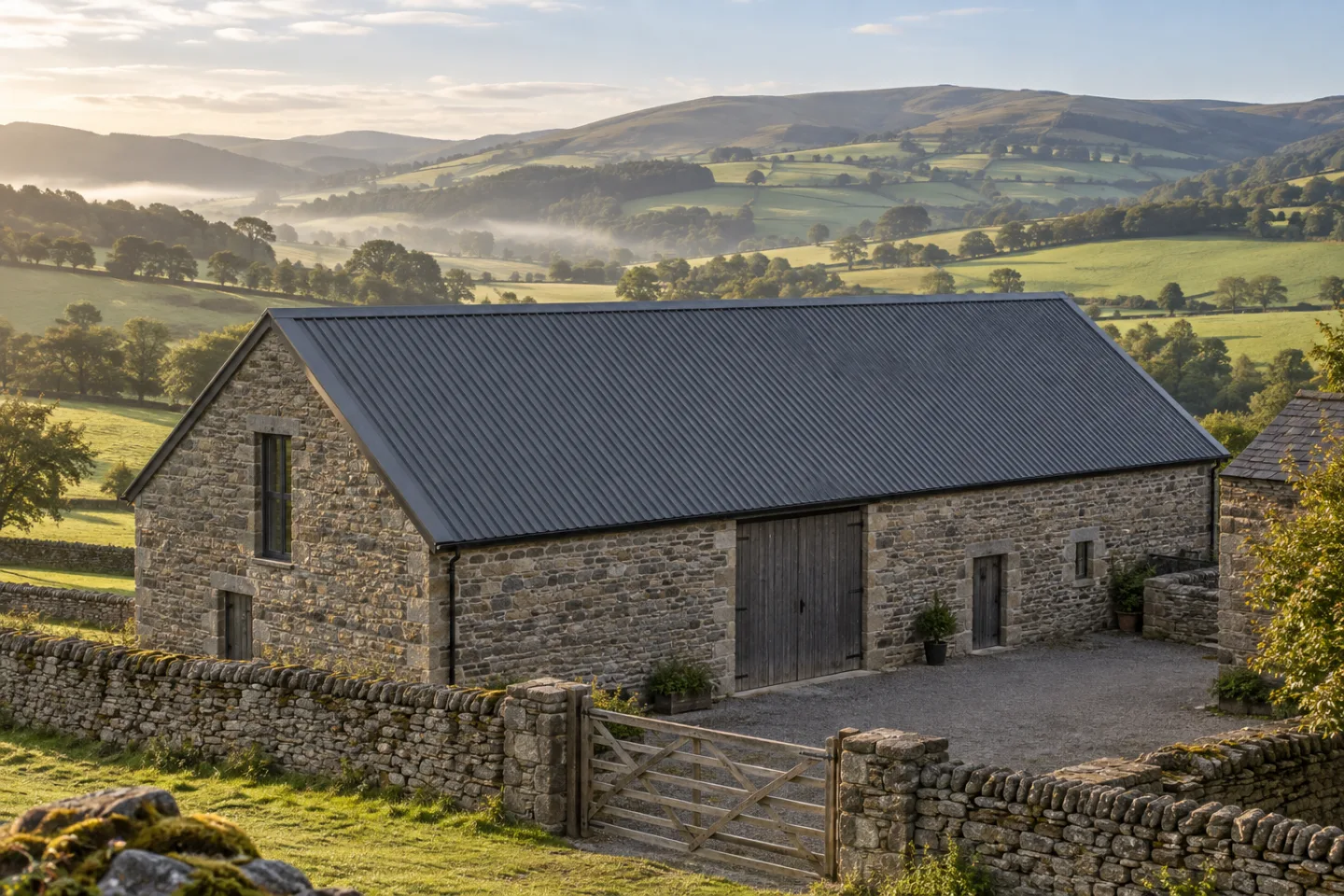
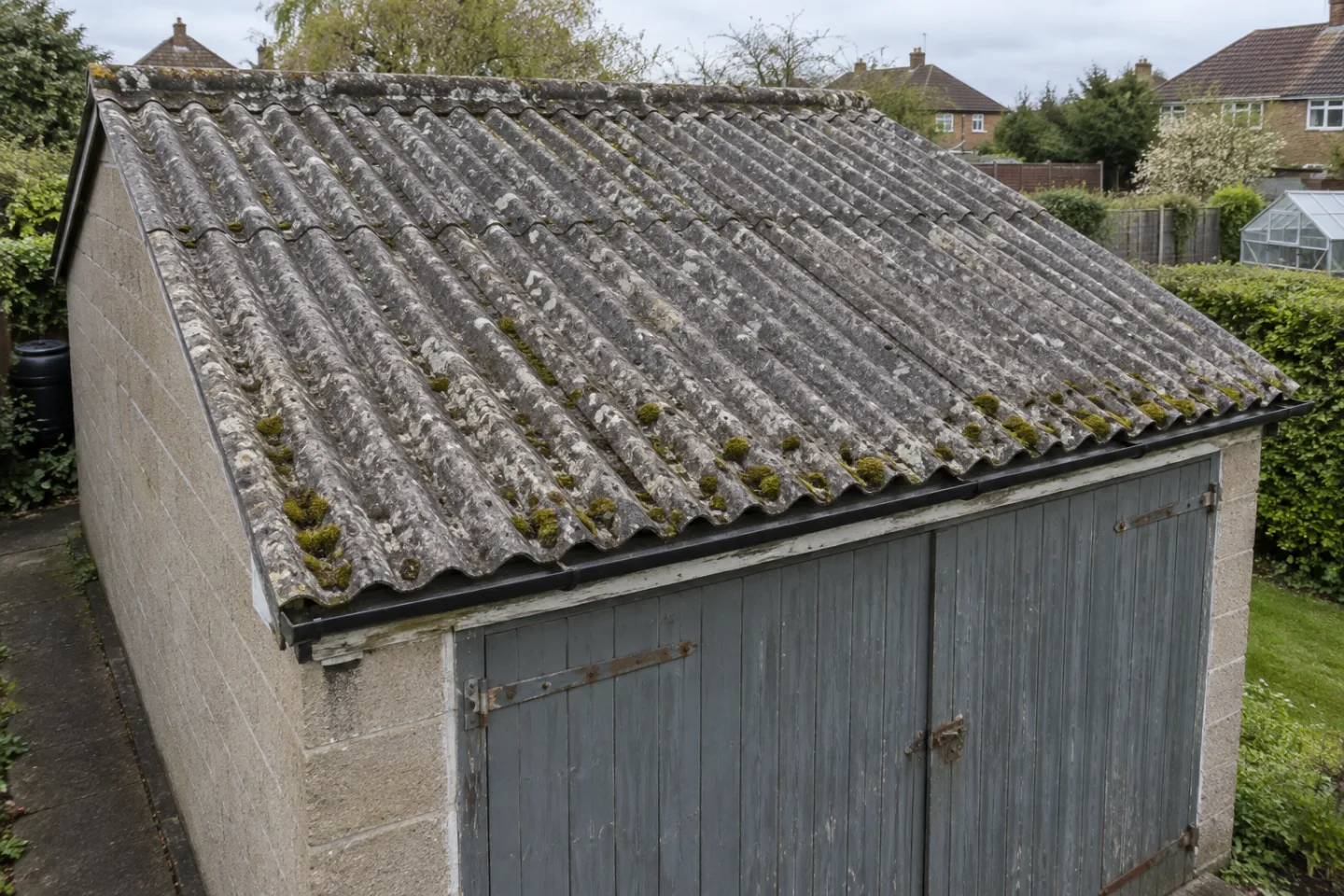
Most of the older housing in Powys and Ceredigion is roofed in natural slate, and a lot of it came from quarries within a day's cart ride: Corris and Aberllefenni above Machynlleth, the North Wales quarries at Penrhyn, Dinorwig and Blaenau Ffestiniog, and smaller workings across mid Wales. A slate roof that has lasted a hundred and thirty years is not a failed roof, it is a roof whose nails and battens have worn out. Re-slating puts the same covering back on new fixings, and it is the work the best local roofers are proudest of. Tell us about yours and we will put you in touch with one.
What slate re-roofing involves
Grading the existing slate
Every slate is taken off, tapped, and sorted. A slate that rings is sound; one that thuds has delaminated and goes. On a typical Victorian roof here a third to a half of the slate is reusable, and it goes on the elevation people see.
Matching new slate
New Welsh slate from Penrhyn or Cwt-y-Bugail matches the originals in colour and texture and is the choice in conservation areas and the national parks. Spanish slate is thinner, cheaper and perfectly good for a roof outside those constraints, and a roofer should show you both before you decide.
Nails, battens and diminishing courses
Old roofs were often laid in diminishing courses, larger slates at the eaves and smaller towards the ridge, which is what gives them their look. A good re-slate keeps the coursing, uses copper or stainless nails, and sets the batten gauge for each course rather than one gauge for the whole slope.
Ridges, hips and verges
Blue-black clay ridge tiles bedded in mortar are traditional here; dry-fix ridge systems are used where a roof is exposed to the coast or the mountains and the mortar would not last. Verges are pointed or fitted with dry verge, and the choice affects how the roof looks from the street.
How it works through us
Send us the town, the age of the house and what the roof is doing. We pass it to one local roofer who works in slate and knows the planning position in your town, and they visit and quote in writing. There is no charge for the enquiry and no obligation when the quote arrives.
Materials and standards
Slating is covered by British Standard BS 5534, which sets fixing, headlap and batten requirements according to the roof's pitch and exposure. Exposure matters a great deal here: a roof at Borth or Aberystwyth is in the most severe wind zone in Wales and needs a bigger headlap and more fixings than the same roof in Presteigne. Ask the roofer what exposure category they have used and why.