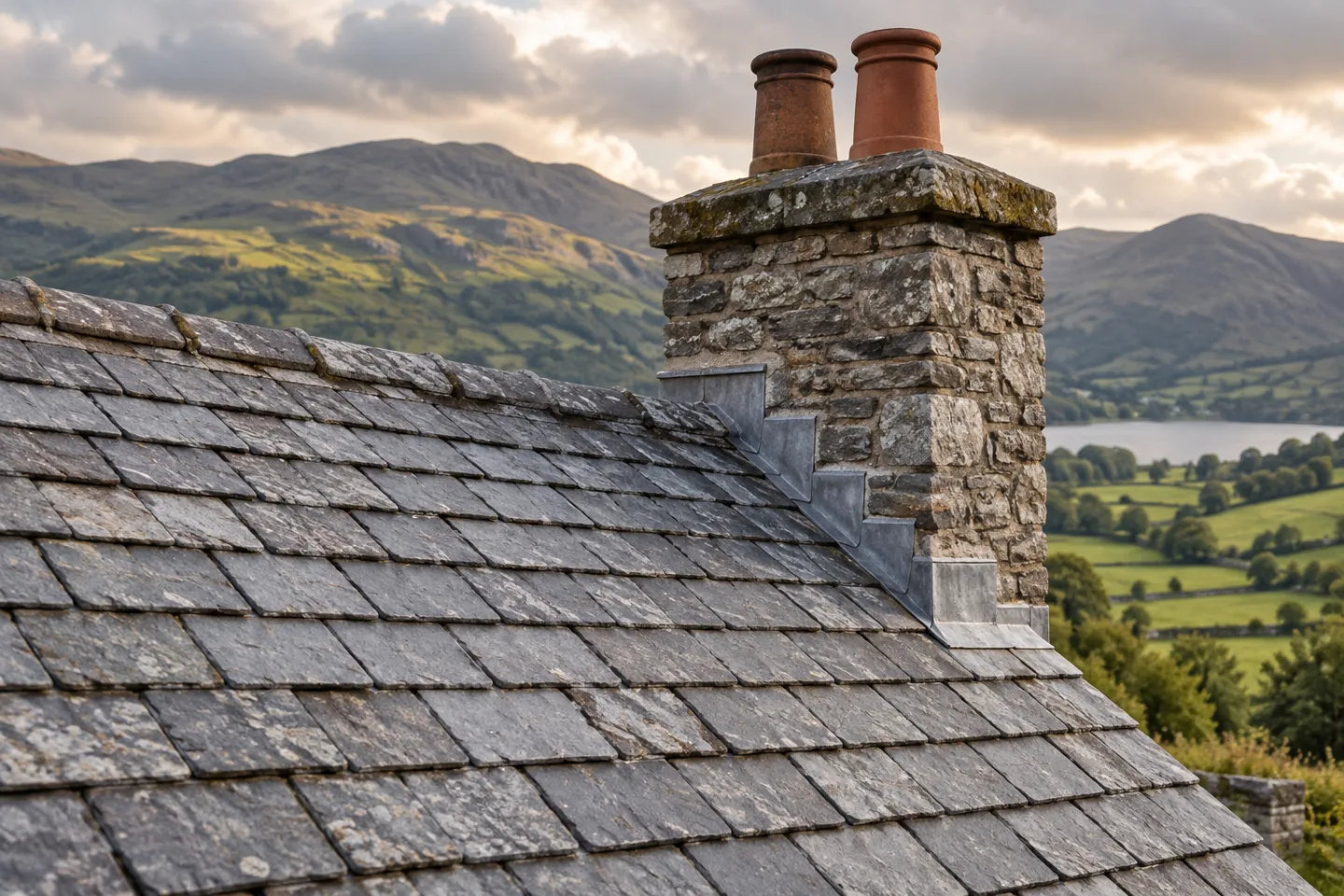
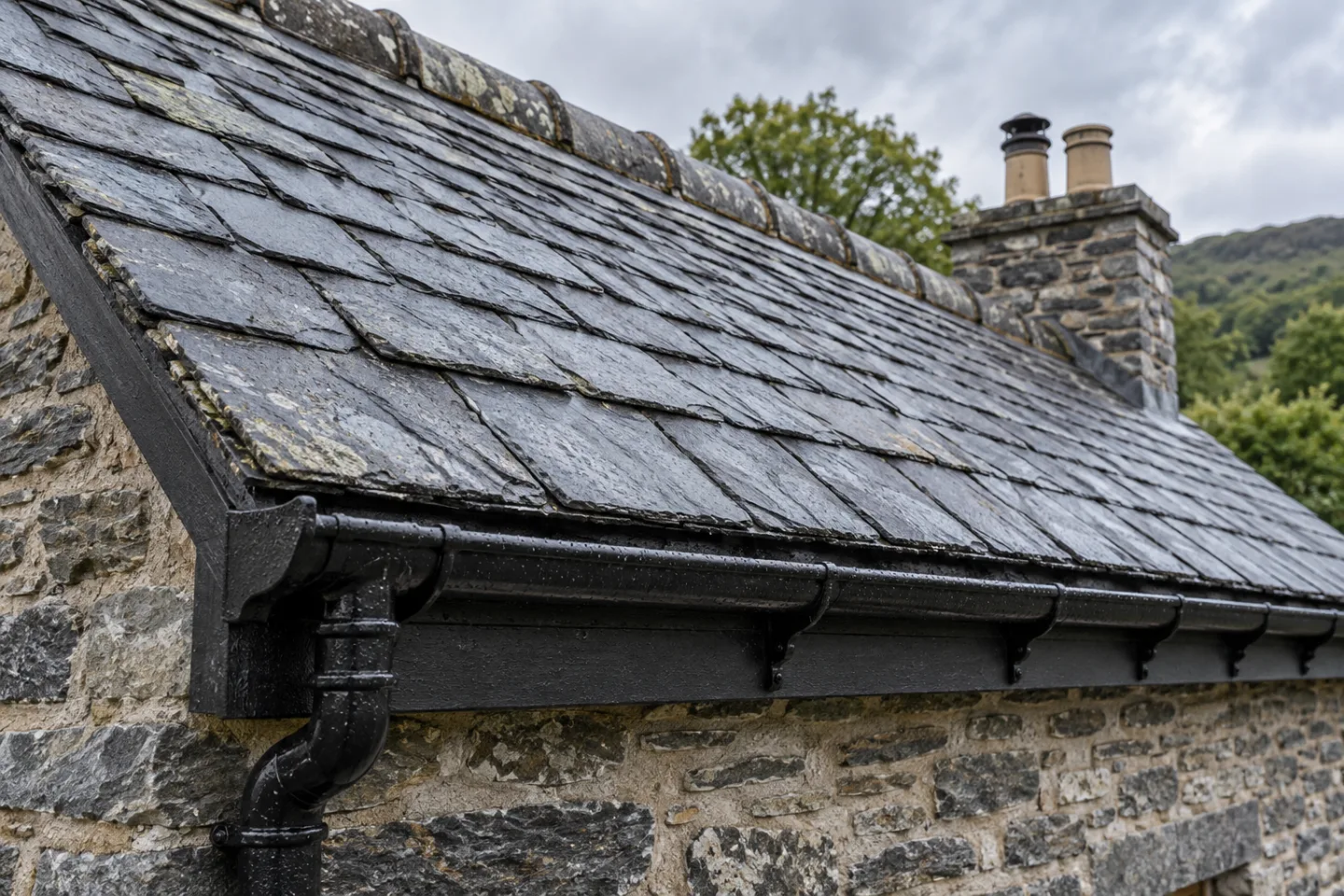
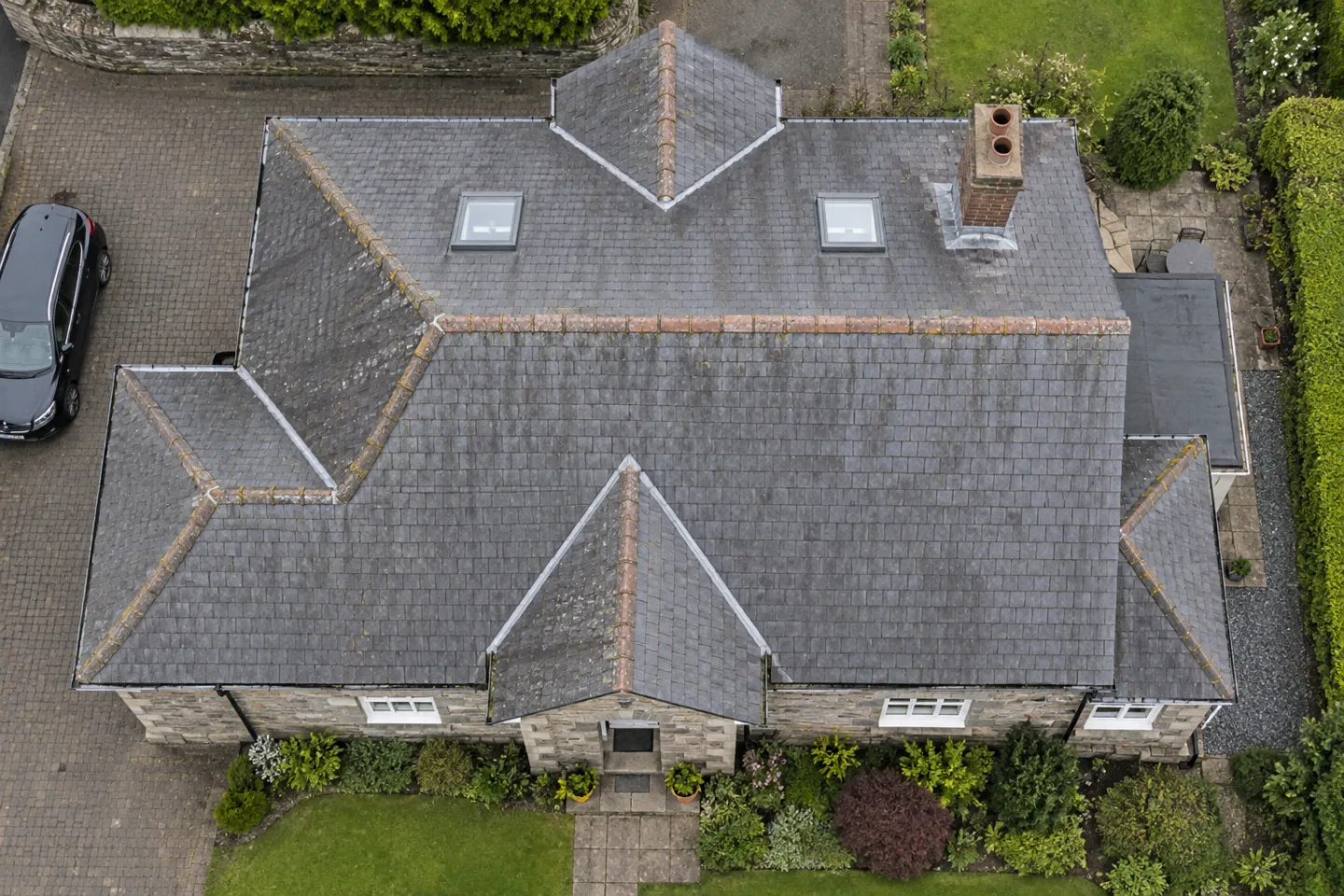
The chimney is the part of the roof that gets the most weather and the least attention. Stone stacks on the old farmhouses of mid Wales, red sandstone stacks in Brecon, brick stacks on the Victorian terraces of Aberystwyth and Llandrindod: all of them lose their mortar to frost, their flaunching cracks, and eventually the stack leans or the leak at its base becomes permanent. Tell us what you can see and we pass it to a local roofer who does chimney work.
What chimney work involves
Repointing
Raking out the failed joints and repointing in a mortar that suits the stack: lime on old stone and soft brick, cement-lime on later brick. The wrong mortar on an old stack does more damage than none.
Flaunching, pots and cowls
The mortar cap the pots sit in cracks and lets water into the stack. Re-flaunching, replacing broken pots and fitting a cowl or cap to a disused flue are small jobs that stop big ones.
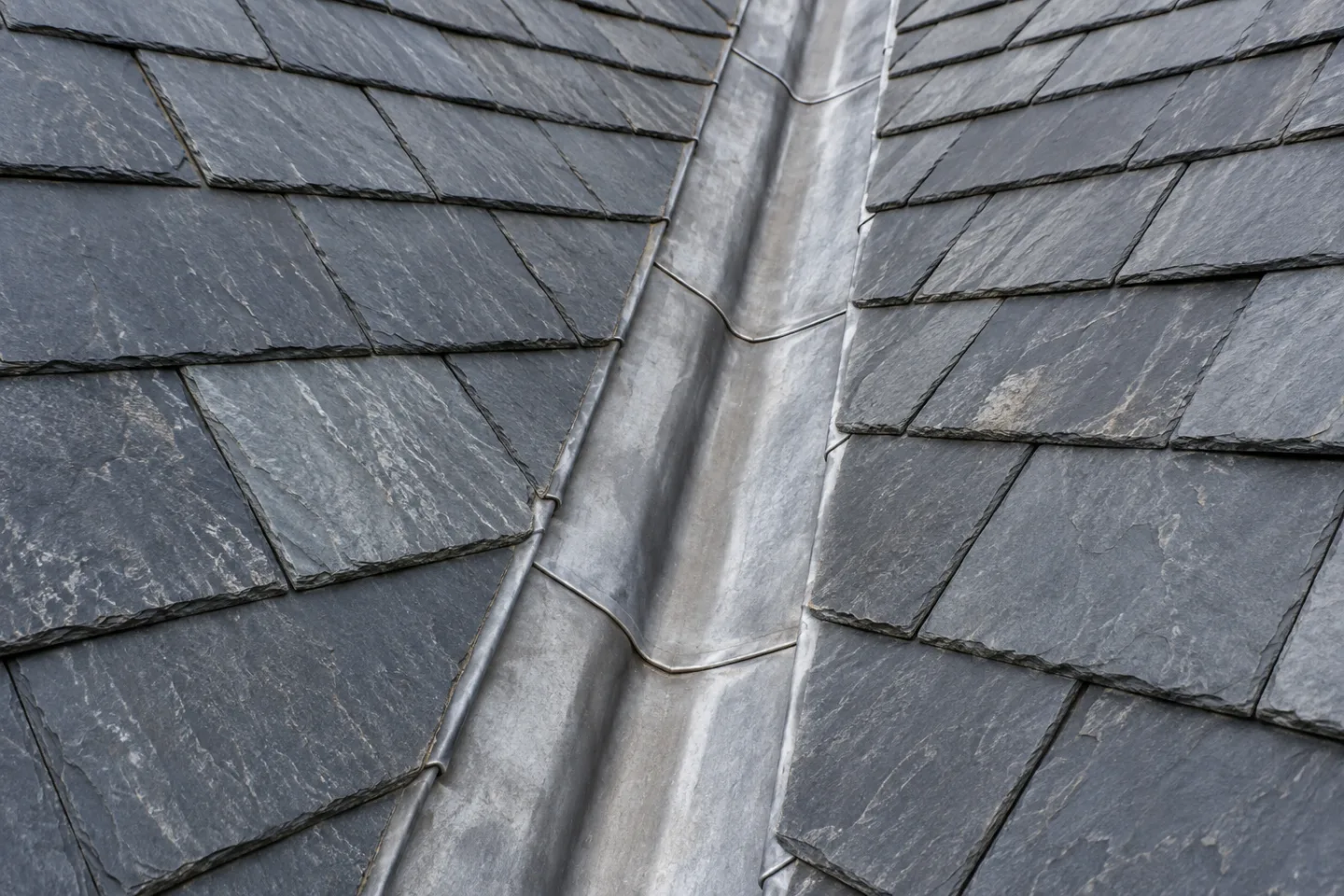
Lead trays, flashings and back gutters
Most chimney leaks are at the junction with the roof. A proper repair renews the front apron, the soakers and stepped flashing up the sides, and the back gutter behind the stack, in lead of the right code.
Partial and full rebuilds
When the stack has moved or the masonry has spalled through, the top courses come down and go back up in new brick or the original stone, with a new tray built in. A stack that is no longer used can sometimes be taken down below the roofline and the roof slated over, which needs Building Regulations approval.
How it works through us
Send us photographs of the stack from the ground and a note of where the damp shows inside. We pass it to a roofer who covers your town, and they quote in writing. Free to use, no obligation.